

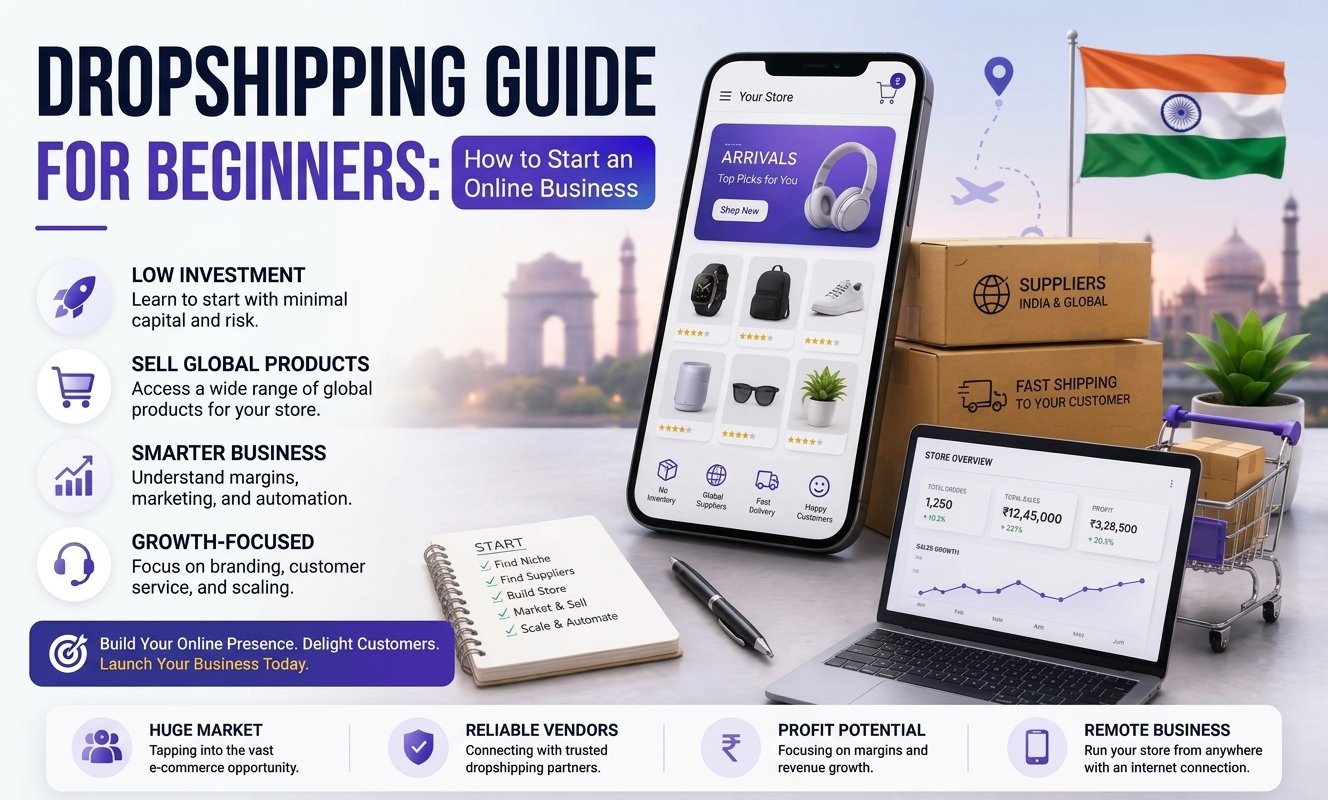
Starting an online business can be an appealing opportunity for people who want to sell products without renting a shop or maintaining a warehouse. However, traditional retail often requires purchasing inventory before knowing whether customers will buy it. Dropshipping offers an alternative by allowing a business to sell products that a third-party supplier stores and ships directly to customers.
This dropshipping guide explains how the business model works, how to select products, how to find reliable suppliers, and how to calculate potential profits. It also covers marketing, customer service, legal responsibilities, and common mistakes. Although dropshipping can reduce inventory-related expenses, it does not guarantee success or eliminate the need for careful financial planning.
Why Beginners Are Interested in Dropshipping
Dropshipping can help beginners test product ideas without buying large quantities of stock in advance. Dropshipping Guide also allows entrepreneurs to operate online and serve customers in selected markets.
However, a low inventory requirement does not mean the business is free to start. Website subscriptions, product samples, marketing, payment processing, refunds, and working capital can all require investment.
What to Know Before Starting a Dropshipping Business
Before launching, research your target audience, product demand, competition, supplier reliability, and expected expenses. Avoid assuming that a trending product will automatically generate sales.
A practical dropshipping guide should encourage beginners to start with a manageable budget, test products carefully, and make decisions using actual business results rather than unrealistic income promises.
How Does Dropshipping Work?
The process generally follows six steps:
- The retailer selects products and lists them in an online store.
- A customer places an order and pays the retailer.
- The retailer forwards the order details to the supplier.
- The retailer pays the supplier according to the agreed terms.
- The supplier prepares and ships the product.
- The retailer provides order updates and handles customer questions.
The exact process varies depending on the supplier, payment arrangements, and e-commerce platform.
The Roles of Sellers, Suppliers, and Customers
The retailer manages sales and the customer relationship. The supplier stores products, prepares orders, and arranges fulfillment. A shipping company may transport the package, while the customer expects the item to match its description and arrive within the stated delivery period.
Because the retailer may never physically handle the product, supplier communication and quality checks are especially important.
How Orders, Payments, and Shipping Work
In a Dropshipping Guide, customers usually pay through the retailer’s checkout system. The retailer then pays the supplier and covers other applicable costs. Payment processors may charge fees or delay fund transfers, so retailers need enough working capital to pay suppliers before receiving the customer’s money.
Shipping times depend on warehouse location, stock availability, destination, customs procedures, and the carrier. Delivery estimates should be realistic and clearly communicated before customers purchase.
How to Start a Dropshipping Business Step by Step
Choose a Suitable Dropshipping Niche
A niche is a specific product category or customer group. Examples include home organization, stationery, travel accessories, and practical pet products.
Choose a category you can research and explain confidently. Evaluate customer demand, competition, product quality, shipping costs, and potential profit before committing to a niche.
Research Your Target Audience and Market Demand
A Dropshipping Guide recommends identifying potential customers, understanding their needs, and learning about their purchasing priorities. Competitor stores, product reviews, search trends, and customer discussions can help reveal common questions, problems, and product preferences.
Use this information to identify opportunities, but remember that online interest does not guarantee sales. Validate demand before spending heavily on advertising.
Find Reliable Dropshipping Suppliers
Compare suppliers based on product quality, pricing, stock availability, shipping arrangements, communication, and return policies. Ask how they handle damaged products, incorrect orders, and stock shortages.
Do not choose a supplier based only on low prices. Poor fulfillment can cause refunds, complaints, and lost customers.
Choose an E-Commerce Platform
An e-commerce platform provides tools for displaying products, accepting orders, and managing your store. Compare platforms based on subscription fees, payment support, customization, supplier integrations, and ease of use.
Before selecting a platform, a Dropshipping Guide recommends checking whether the service supports your business location and preferred payment methods. Review the current pricing, transaction fees, and available features to choose a platform that fits your business needs.
Build and Customize Your Online Store
Create clear navigation, organized product categories, accurate photographs, and useful descriptions. Include relevant details such as dimensions, materials, compatibility, and delivery estimates.
Make your store mobile-friendly and provide accessible contact information. Clear shipping, privacy, refund, and return policies help customers understand what to expect.
Launch Your Store and Test the Ordering Process
Before promoting your store, check product listings, checkout settings, shipping charges, order notifications, and support channels. Place a test order when possible to identify problems.
Begin with a manageable product selection. Monitor early orders carefully and resolve fulfillment issues before expanding your catalog or increasing advertising expenditure.
How to Find the Right Products for Your Dropshipping Business
Identify Products That Solve Customer Problems
A Dropshipping Guide suggests choosing products with clear practical benefits rather than selecting items simply because they are trending. For example, storage accessories can help customers organize small spaces, while travel organizers can make packing more convenient.
Focus on usefulness, quality, and customer suitability. Avoid unsupported claims about performance, durability, or health benefits.
Analyze Product Demand and Competition
Study competing stores, customer reviews, search interest, and common product questions. Look for opportunities to improve the buying experience through better information, dependable service, or a more focused product selection.
Competition does not automatically make a product unsuitable. However, you should understand why customers might choose your store over alternatives.
Evaluate Product Quality and Shipping Costs
Calculate the complete fulfillment cost rather than considering the product price alone. Include shipping, packaging, possible customs charges, and potential replacement or return expenses.
Order samples when practical. Inspecting the actual product can reveal differences between promotional images and what customers will receive.
Validate Product Ideas Before Investing in Advertising
Estimate expenses and test interest through a small campaign or relevant audience. Track inquiries, purchases, and customer feedback rather than relying only on views or likes. Treat early results as useful evidence, not a guarantee of long-term demand.
How to Choose Reliable Dropshipping Suppliers
Where to Find Potential Dropshipping Suppliers
A Dropshipping Guide recommends finding potential suppliers through manufacturer websites, wholesale directories, supplier platforms, and direct business contacts. Some suppliers also offer integrations that synchronize product listings and orders with online stores, helping simplify daily operations.
Verify a supplier’s identity, terms, and ability to serve your target market before working together.
How to Evaluate Supplier Quality and Reliability
Review product specifications, communication, pricing transparency, processing times, and fulfillment policies. Ask how stock levels are updated and how delivery problems are resolved.
Keep written records of agreements and important conversations. Compare supplier performance regularly instead of assuming the first supplier will always be suitable.
Compare Shipping Times, Prices, and Return Policies
Compare total costs and realistic delivery estimates. A low product price may not be worthwhile if shipping is expensive or returns are difficult.
Understand who pays return shipping costs and how damaged or incorrect items are handled. Explain relevant conditions clearly to customers.
Order Product Samples Before Selling
Samples help you evaluate quality, packaging, instructions, and delivery speed. Testing products also gives you a stronger basis for writing accurate descriptions.
Although samples cannot eliminate every risk, they provide better evidence than relying entirely on supplier claims.
How Much Does It Cost to Start a Dropshipping Business?
Online Store Setup and Platform Expenses
Setup expenses may include a domain name, an e-commerce subscription, design tools, and optional applications. A Dropshipping Guide can help you understand these costs before starting. The total depends on your chosen platform and required features.
Product Samples and Supplier-Related Costs
Budget for samples, delivery, and applicable supplier charges. You may also need working capital to pay suppliers before customer payments become available.
Marketing, Advertising, and Operating Expenses
Marketing may involve paid advertising, social media promotion, content creation, and search engine optimization. Other expenses can include payment processing, accounting, refunds, and customer support.
How to Create a Realistic Startup Budget
Separate one-time expenses, recurring costs, and costs that increase with sales. Keep a reserve for unexpected refunds, delivery delays, and replacement products.
Dropshipping reduces the need to purchase inventory in bulk, but Dropshipping guide does not eliminate financial risk. Build your budget around actual platform fees, supplier terms, and your marketing plan.
How to Price Products and Calculate Dropshipping Profits
Understanding Revenue, Costs, and Profit Margins
Revenue is the money collected from sales. Profit is what remains after relevant expenses are deducted.
Consider this simplified example:
| Item | Amount |
| Customer payment | $35 |
| Product and supplier shipping | −$16 |
| Payment processing | −$2 |
| Advertising attributed to the order | −$7 |
| Remaining contribution | $10 |
Setting Competitive Product Prices
A Dropshipping Guide recommends researching competing products and evaluating the value your store offers customers. Avoid relying entirely on low prices, as insufficient profit margins can make it difficult to cover operating expenses and maintain a sustainable business.
Accounting for Shipping Fees, Refunds, and Advertising
Include all significant costs when evaluating a product. Monitor actual advertising expenses and refund rates because regular sales do not automatically mean the business is profitable.
Calculating Profit Before Scaling Your Business
If each order contributes $10 toward fixed expenses and monthly fixed costs are $100, you need 10 comparable orders to cover those fixed costs, assuming other factors remain unchanged. This calculation excludes taxes and additional expenses.
Increase spending only when your figures indicate that the business can handle more orders without creating fulfillment or cash-flow problems.
How to Market Your Dropshipping Online Store
Use Search Engine Optimization to Attract Organic Traffic
Create useful product pages, descriptive headings, and articles that answer customer questions. Use relevant search terms naturally rather than repeating keywords excessively.
SEO, as explained in a Dropshipping Guide, can help search engines understand your pages, but indexing and rankings are not guaranteed.
Promote Products Through Social Media
Share useful demonstrations, product explanations, and practical tips on platforms your audience uses. Use genuine customer feedback only with appropriate permission, and avoid misleading promotional claims.
Understand Paid Advertising and Campaign Costs
Paid advertising can bring visitors to your store, but results depend on targeting, competition, conversion rates, and product costs. Start with a controlled budget and evaluate actual sales before increasing expenditure.
Create Helpful Content and Persuasive Product Pages
Explain product features, benefits, limitations, and intended uses. Accurate descriptions help customers make informed decisions and reduce misunderstandings.
Build Customer Trust and Encourage Repeat Purchases
Respond promptly to questions, communicate delays honestly, and handle complaints fairly. Reliable service can encourage repeat purchases and positive recommendations.
Read more: Myclassnews: What It Is and How to Find Useful Information
Common Dropshipping Challenges and How to Handle Them
Managing Shipping Delays and Product Availability
A Dropshipping Guide recommends monitoring supplier stock levels and delivery schedules, as suppliers may run out of stock or experience shipping delays. Notify customers promptly whenever product availability or estimated delivery dates change.
Handling Returns, Refunds, and Customer Complaints
Create clear policies and follow applicable consumer protection rules. Outsourcing fulfillment does not automatically remove your responsibility to customers.
Dealing With Supplier Quality Problems
Track defects, incorrect orders, and complaints. If a supplier repeatedly fails to meet expectations, investigate the problem and consider another provider.
Competing With Other Online Stores
Differentiate your business through product knowledge, helpful content, dependable service, and clear communication rather than relying entirely on discounts.
Common Dropshipping Mistakes Beginners Should Avoid
Beginners should avoid choosing products without research, trusting unverified suppliers, underestimating expenses, and expecting guaranteed profits. Other common mistakes include publishing misleading delivery estimates, neglecting customer support, and increasing advertising too quickly.
Another mistake is assuming that the supplier is responsible for every customer-facing problem. As the retailer, you should have a plan for late deliveries, defective products, refunds, and stock shortages.
Legal and Business Requirements for Dropshipping
Understanding Business Registration and Tax Obligations
A Dropshipping Guide recommends checking the requirements for your business location, customers’ locations, and the products you sell. Research the relevant business registration, tax, and reporting obligations before launching your store.
Following Consumer Protection and Refund Rules
Explain prices, shipping estimates, cancellations, and refund conditions clearly. Make sure your policies are consistent with applicable laws and your actual business practices.
Checking Product Safety and Intellectual Property Rights
Avoid counterfeit goods and unauthorized use of protected logos, images, and designs. Check product safety requirements, labeling rules, and import restrictions in your target market. You may still have legal responsibilities for products sold through your store even when a supplier ships them.
Creating Clear Shipping, Privacy, and Return Policies
Explain how orders are fulfilled, how customer information is handled, and how returns are processed. Keep policies accessible, accurate, and consistent with the service you provide.
Tips for Growing a Dropshipping Business Successfully
Track Sales, Expenses, and Customer Feedback
Monitor revenue, fulfillment times, refunds, advertising costs, and contribution per order. A Dropshipping Guide recommends tracking these measurements to identify profitable products and determine which ones deserve further investment.
Improve Website Performance and User Experience
Keep navigation simple, product information readable, and checkout straightforward. Test your website on mobile devices and fix broken links or confusing steps.
Build Long-Term Relationships With Reliable Suppliers
Communicate expectations clearly and review supplier performance regularly. Where possible, identify backup suppliers for important products.
Use Business Data to Improve Decisions
Make decisions based on measurable results rather than assumptions. Tests change carefully and expand only when demand, fulfillment, and costs are manageable.
FAQs About Dropshipping Guide
Is Dropshipping Suitable for Beginners?
Yes, dropshipping can suit beginners who are willing to learn product research, marketing, supplier management, and customer service. However, it still involves financial and operational risks.
How Much Money Do You Need to Start Dropshipping?
There is no universal starting amount. Your budget depends on store fees, product samples, marketing, supplier terms, and other operating expenses.
Do You Need to Keep Inventory for a Dropshipping Business?
Usually, no. The supplier stores and ships the products, although ordering samples is recommended for quality testing.
How Long Does It Take to Make a Profit From Dropshipping?
There is no guaranteed timeline. Profitability depends on demand, costs, marketing performance, supplier reliability, and customer satisfaction.
Is Dropshipping Still Worth Considering in 2026?
Dropshipping Guide can be worth considering if you identify a genuine customer need, manage costs carefully, and provide reliable service. It is not a guaranteed source of income, and results vary from one business to another.
Final Thoughts
Dropshipping offers a way to explore online retail without managing a traditional warehouse, but it requires more than listing products on a website. Beginners need to research their market, verify suppliers, calculate realistic prices, market responsibly, and support customers.
Use this dropshipping guide to plan carefully, start with a manageable budget, test products before scaling, and improve your store using real business data. Focus on customer value and long-term reliability rather than promises of quick profits.
